I want to show you something I see almost every week. A brand comes to us with a brief. The brief says something like: "We want a cinematic, emotionally resonant brand film that showcases our product in a premium light. Tone: aspirational. Length: 60 seconds."
Then they show us their references. Beautiful AI-generated imagery. Sweeping landscapes. Dramatic lighting. A figure walking through a photorealistic environment that couldn't exist in the real world.
It looks incredible. And it means absolutely nothing.
Because nobody — not the brand, not their agency, not anyone in the approval chain — has answered the most basic question in filmmaking: what's the story?
A Brief Is Not a Story
"Hero product in aspirational setting with emotional music" is a mood. It's an aesthetic direction. It is not a story. A story requires a character, a tension, and a resolution. Without these three elements, you have a screensaver with a logo at the end.
When we take on a brand project at Komodo X, the first question is never "what should it look like?" The first question is "what should happen?" What does the viewer experience in the first five seconds that makes them stay for the next fifty-five?
Mood Boards Are Not Direction
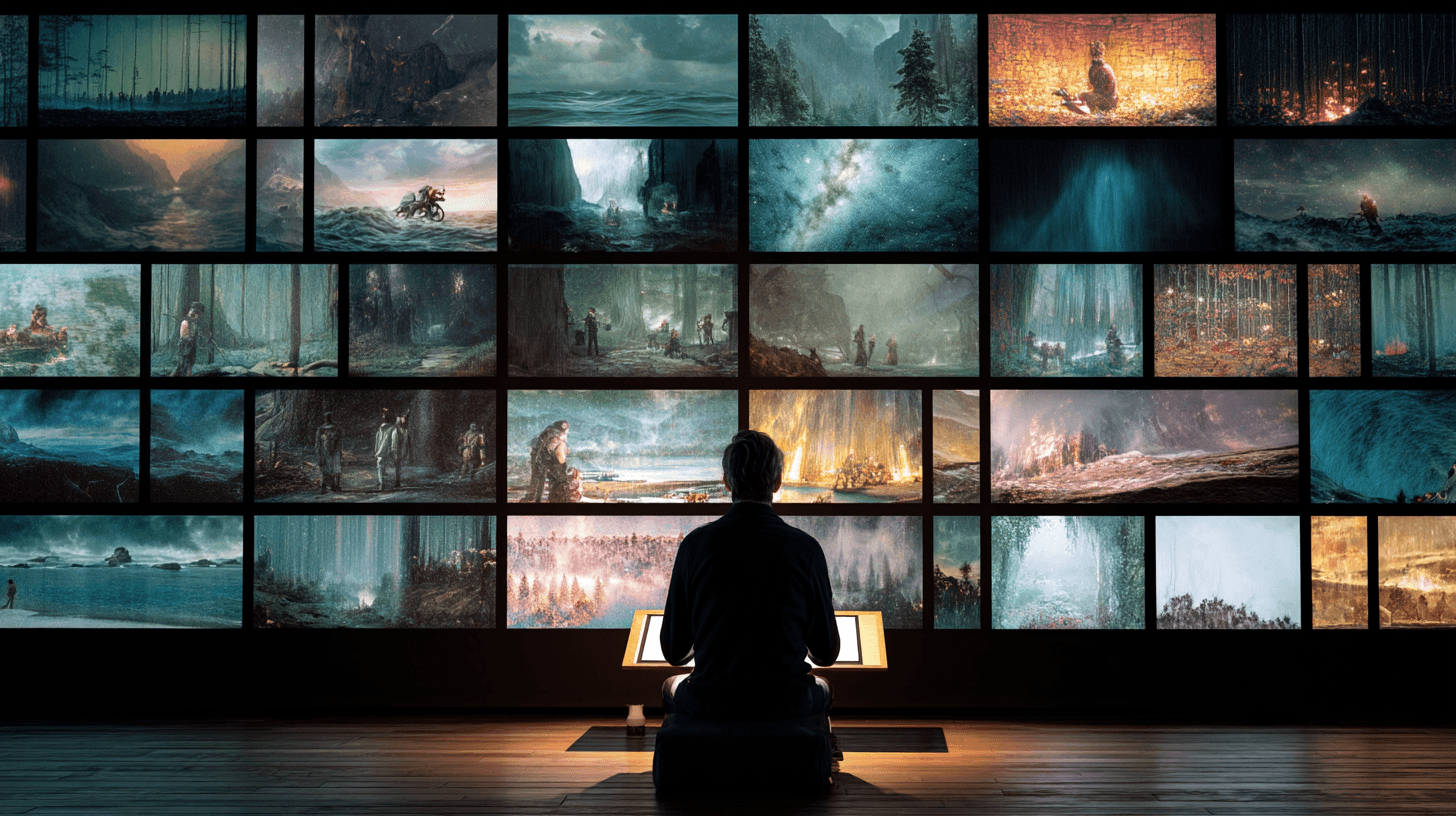
I see this constantly. A client shares forty reference images. Sunset palettes. Architectural photography. Film stills from Blade Runner and Dune. "This is the world we want." Beautiful. But what happens in this world?
"Mood boards tell you what the universe looks like. Direction tells you what the camera does inside that universe."— Zulfiqar Ali
When our directors work on a project, the mood board is step one of about twelve. By step three, we have a shot-by-shot narrative that maps emotional beats to specific frames.
"Make It Cinematic" Is Not a Strategy
This phrase has become a pandemic. Every brief says it. And it means nothing specific. Cinematic is not a look. It's a feeling — and that feeling comes from structure, not aesthetics.
You can generate the most photorealistic, beautifully lit AI footage ever produced. If the edit has no rhythm, the music has no relationship to the visuals, and the sequence has no narrative logic — it will feel like a tech demo, not a film.
Where This Leaves Brands
Here's the honest truth: AI made production cheap. That means story is now the only competitive advantage in content.
The AI didn't write your story. If you shipped something that looks beautiful and performed terribly — that's not the AI's fault. That's a story problem.