There's a sentence floating around every industry conference, every LinkedIn thread, every agency pitch deck right now: "AI will replace creatives." I've heard it a hundred times. And every time, I know the person saying it has never directed anything.
Here's what AI actually did. It removed the production barrier. The thing that used to cost six figures, three weeks, and a 20-person crew? A talented operator can now generate a version of it in hours. Footage that looks cinematic. Environments that feel real. Motion that holds up on a phone screen.
That part is true. And it terrified a lot of people.
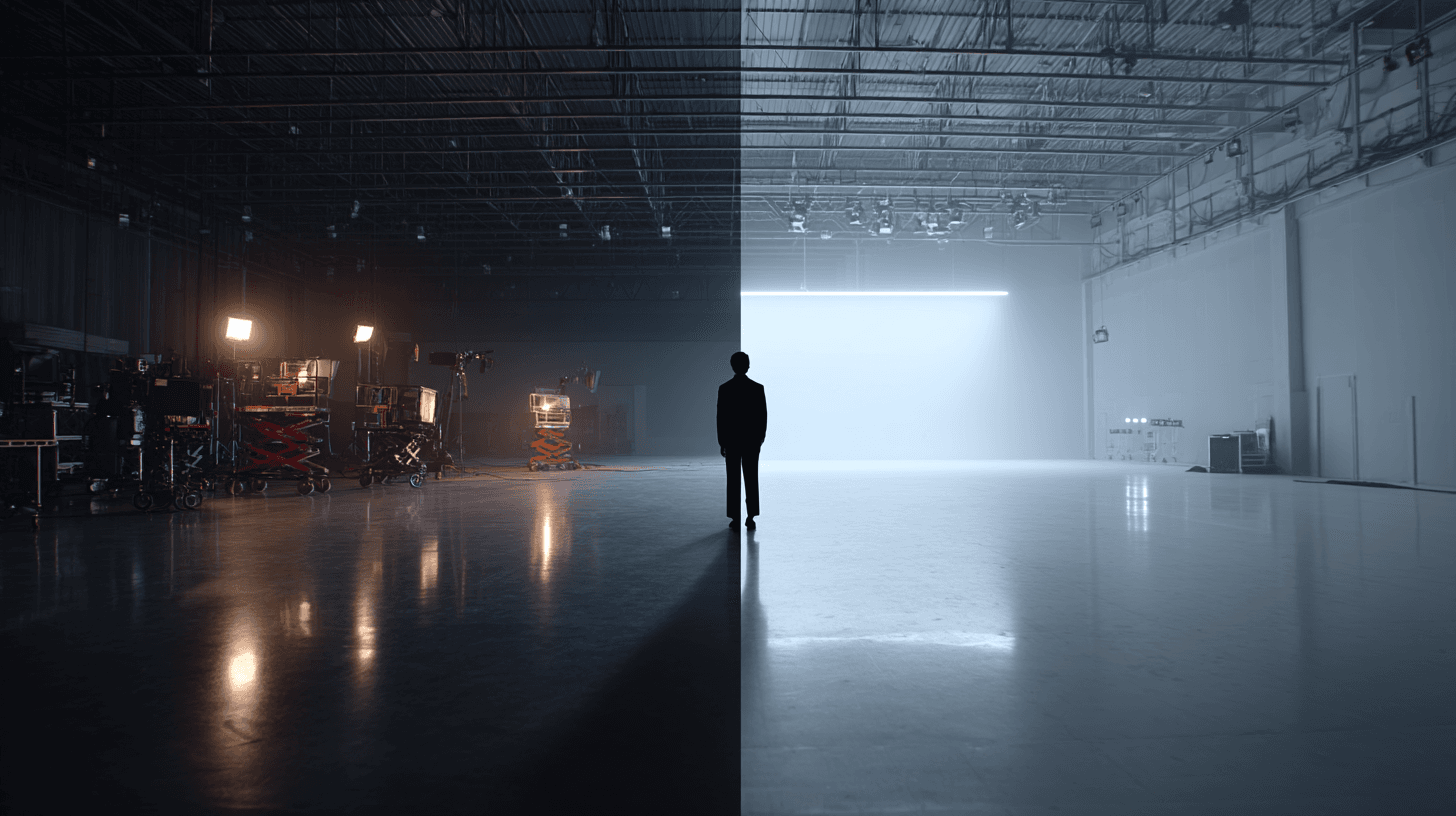
But here's what nobody talks about: while AI demolished the production barrier, it raised the taste barrier to a height most people can't clear.
The Taste Barrier
When production was expensive, mediocre creative directors could hide behind logistics. "We didn't have the budget for that shot." "The location didn't work out." "We ran out of shoot days." Those excuses absorbed a lot of bad taste. The constraints themselves created a built-in alibi for underwhelming work.
Now the constraints are gone. You can generate any environment. Any lighting condition. Any camera angle. Any wardrobe. Any time of day. The canvas is infinite. And when the canvas is infinite, the only thing that determines whether the output is extraordinary or forgettable is the person making the decisions.
That person is the director.
Not the prompt engineer. Not the AI operator. Not the person who knows which model to use or which settings produce the sharpest output. Those are technical skills, and they matter. But they're not the skill that determines whether someone watches your film and feels something.
The skill that matters now — more than it ever has — is taste. Knowing which frame to keep and which to throw away. Knowing when the edit needs to breathe and when it needs to cut hard. Knowing that the music choice is wrong even when the client says it's fine.
After building a social media agency, I explored AI and founded Komodo X two years ago when AI was not even a buzzword. When generative AI arrived, I didn't see a threat. I saw the removal of the one barrier that had kept studios like mine from competing at the highest level — cost.
The XonTM Methodology
At Komodo X, we built a methodology called XonTM. The name isn't accidental. Every project we take on — whether it's a brand film or an original short — starts with a director's vision. Not a prompt. A shot list. A mood document. Performance notes. Decisions about what the audience should feel at second four, second twelve, second thirty.
Then — and only then — does the AI pipeline activate. Our generative tools serve the director's intent. They don't generate the intent.
"This loop — human vision, machine execution, human refinement — is the future of filmmaking."— Kashif Younus Ali
The studios that understand this will thrive. The ones that don't will produce beautiful footage that nobody remembers.
So here's my position, and I'll say it plainly: AI won't replace directors. It won't replace cinematographers. It won't replace editors with taste. It won't replace the person in the room who says "that's not good enough" when everyone else is ready to ship.
But directors who refuse to use AI? Who cling to the old production model because it's familiar? Who insist that a 40-person crew and a three-day shoot is the only way to make something real? They're already being replaced. Not by machines. By other directors who figured out how to pair their vision with a pipeline that moves at the speed of imagination.
The barrier to making something worth watching? That goes up every single day. And that's where directors live.