There is a quiet panic working its way through AI filmmaking circles right now. The panic has nothing to do with which model wins. It has to do with the slow realisation that winning the model war was never the point.
Six months ago, every conversation in this industry was about character consistency. Could your hero look the same in shot two as in shot one. Could her wardrobe survive a cut. Could her eye-line hold through a dialogue exchange. The smart money was on whichever model solved that problem first. Runway Gen-4 effectively did. Persistent character DNA is now table stakes across the major engines. Veo 4 added persistent world-state memory. Novi AI's Long Video Agent extended narrative stability to five minutes. Seedance 2.0 owns the short cinematic shot. The infrastructure problem is solved.
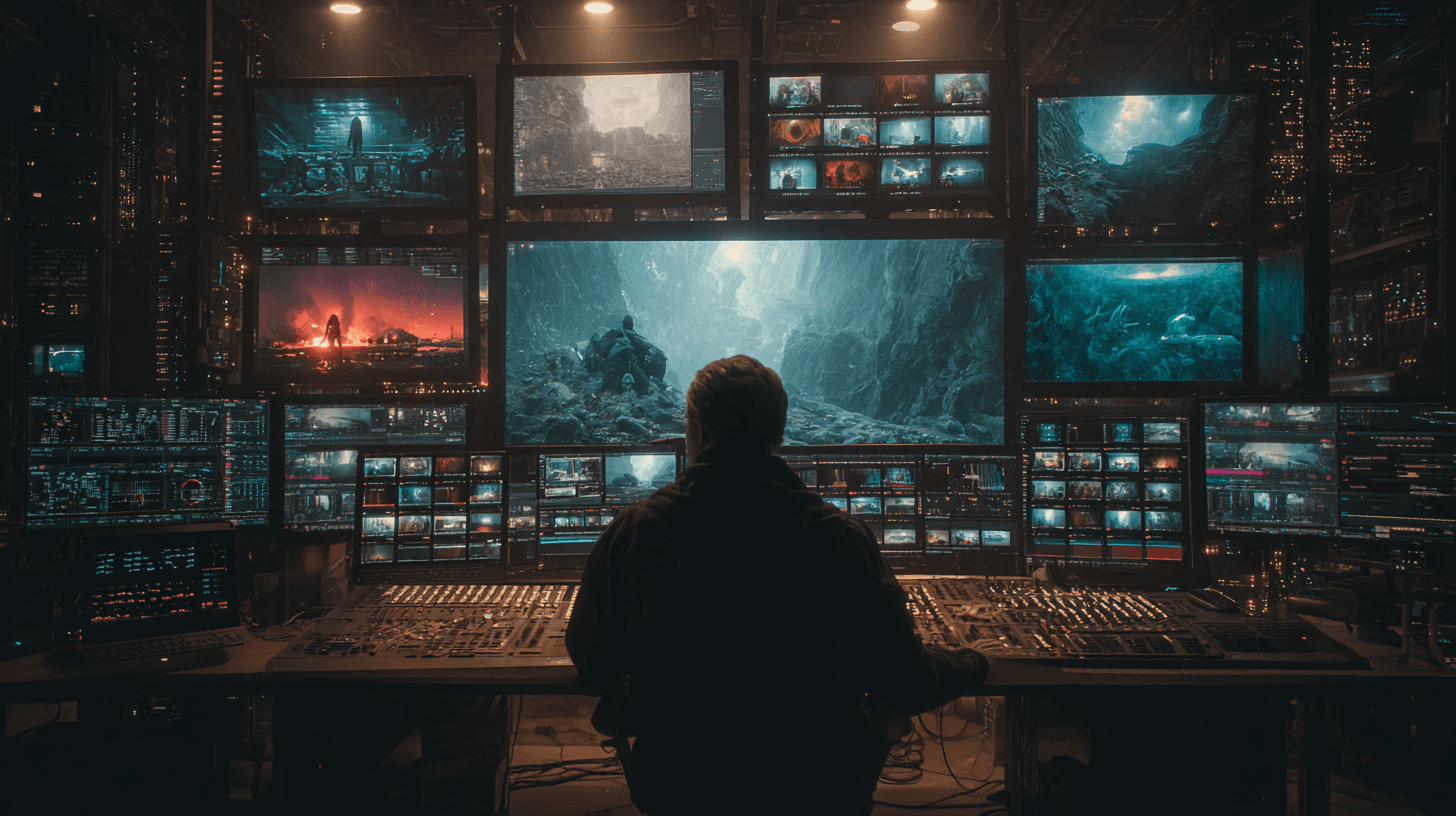
And here is what almost nobody is saying out loud. Solving generation does not produce a film. It produces footage. The gap between footage and cinema is not a tooling problem. It is an editorial problem. And the people who will own the next 24 months of this industry are not the ones racing to master the newest engine. They are the ones learning to cut.
The arms race we just won was the easy one
I want to be precise about what is solved. We can now generate a 15-second clip with character fidelity, location consistency, and physics-accurate motion. We can chain those clips together with reasonable tonal continuity. We can layer Foley and dialogue. The technical floor of AI filmmaking is now where independent film was a decade ago. That is a real achievement, and the engines that delivered it deserve credit.
What is not solved, and what no model release will solve, is the question of when to cut. Where the eye-line wants to land in a reaction shot. How long a held silence can run before the audience leaves. Which beat in a 90-second piece carries the emotional weight of the whole story. These are editorial questions. They have always been editorial questions. They will continue to be editorial questions long after the current crop of models has been replaced.
Why this matters for studios betting on AI cinema
Most AI studios I see are organised around the wrong axis. They have prompt engineers. They have model evaluators. They have pipeline architects. They have, in some cases, outstanding visual directors. What almost none of them have is a senior editorial voice in the room when shot decisions are being made.
This is the structural mistake. In conventional film, the editor enters at post-production and shapes what the director gave them. In AI film, the editor needs to enter at pre-production and shape what the prompt gives the model. Every shot is a generation decision and an editorial decision at the same time. Studios that separate those two functions will keep producing footage that looks expensive and feels flat. Studios that fuse them will produce work that an audience actually finishes.
We learned this the hard way at Komodo X. Our first generation of XON output was technically impressive and emotionally inert. Beautiful frames, no rhythm. We rebuilt the pipeline so editorial pacing decisions happen before the prompt is written, not after the footage is generated. The pacing-manifest layer that sits between our screenplay and our shotlist is the most important component of the system, and it is the component nobody else in the industry is talking about, because the discourse is still pixel-deep.
What an AI editor actually does
Three things, all of which the engines cannot do for you.
First, the AI editor decides where the camera does not go.
Generation models will happily render anything you ask. The discipline of refusing 80% of what is technically possible is the entire game. A great editor knows that the most powerful shot in a sequence is often the one you do not show.
Second, the AI editor sets the rhythm before the prompt is written.
The single biggest mistake I see in AI work is treating each shot as a self-contained generation problem. An audience experiences a film as a temporal sequence, not a frame sequence. The editor's job is to write the temporal logic of the piece into the brief. Where the cuts will land. How long each beat will hold. Which shots are doing structural work and which are doing emotional work. The model cannot infer this. It has to be specified.
Third, the AI editor protects the audience from the studio.
Every AI film I see suffers from over-generation. Too many shots, too much novelty, too little restraint. The editor is the only person in the room whose job is to defend the audience's attention against the team's enthusiasm for the technology. That role becomes more important as generation gets cheaper, not less.
What this means for the next 24 months
The Veo 5 announcement is coming. So is Sora 3. So are half a dozen specialist models for specific cinematic tasks. None of them will close the gap I am describing. They will widen it.
The studios that will win in 2027 are the ones treating editorial discipline as the core competency, with generation as the commodity input. The studios that will lose are the ones still publishing engine comparisons as if the engine were the answer.
"Direction is rewriting. The director's actual work happens in the cut."— David Fincher
He was not making a metaphysical point. He was describing the physical reality of where the film gets made.
AI does not change that. It just means the cut now starts earlier.
Kashif Younus Ali is the Founder and Chief Creative Visionary of Komodo X. This is the second piece in a trilogy on AI cinema, advertising, and the structural shifts of the next 24 months.