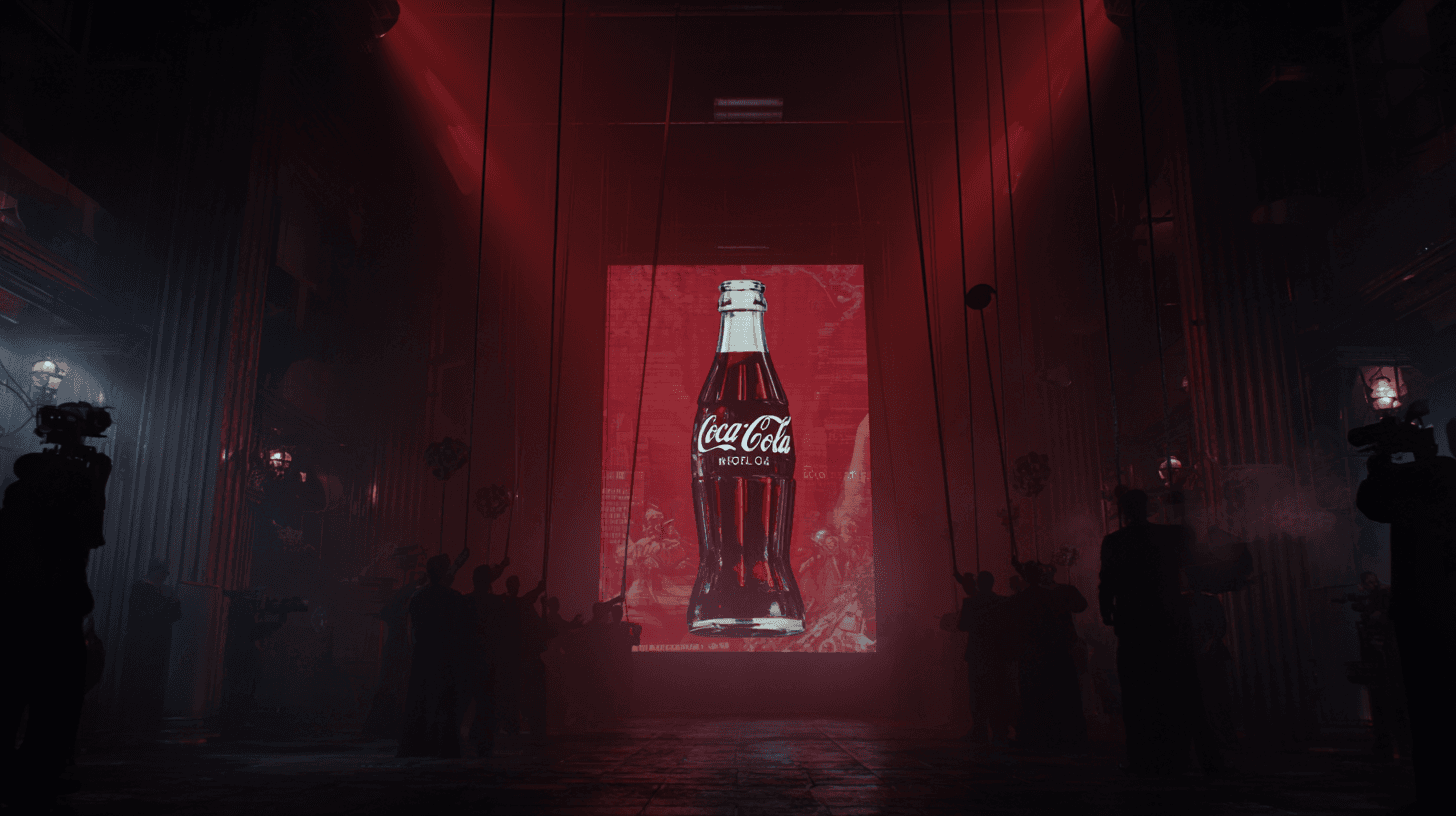
I want to begin with a number that almost nobody who criticised the Coca-Cola AI holiday campaign has fully metabolised. When System1 tested the commercial in independent consumer research, with audiences who did not know how it was made, it scored 5.9 out of 6. That is, by any honest measure, an extraordinary score for any holiday spot, AI or otherwise. Coca-Cola's own internal research, conducted across three independent agencies in North America, Europe, and Latin America, returned the same finding. The mass-market audience responded positively. The brand chose to continue the AI-generated approach based on commercial performance data rather than social-media sentiment.
The creative industry's response to that data has been to argue, essentially, that the audience is wrong. That the consumers who scored the ad highly were unsophisticated. That if they had known the work was AI-generated, they would have hated it. That the real measure of a commercial's quality is not whether it sells the product, but whether it honours the labour of the people who used to make commercials.
I want to take that argument seriously, because I think it is partly right and largely confused. And I want to write this piece honestly, even though Komodo X is on the AI side of this debate, because I think the discourse is producing more heat than clarity, and clarity is more useful to all of us.
The argument the AI backlash is making
Strip away the noise and the AI advertising backlash has three substantive claims, in increasing order of strength.
The weakest claim is aesthetic. AI ads look bad. They have an uncanny-valley sheen, weird hand geometry, soulless lighting, the work looks cheap. This claim was true in 2024. It is increasingly false in 2026. The Coca-Cola 2025 spot used roughly 70,000 generated clips, six engines, a hundred-person team, and a month of production time, and the technical execution was genuinely strong. Audiences scored it accordingly. The aesthetic argument is rapidly becoming an argument from yesterday's evidence.
The middle claim is craft. AI ads are produced without the human craft layers that separate good advertising from forgettable advertising. There is no director on set. No DOP making lighting decisions in the moment. No actor finding a take the writer did not see coming. This claim is partly true, and the response to it is more interesting than either side has been willing to admit. AI cinema is not the absence of craft. It is the relocation of craft. The director is now a prompt director. The DOP is now a cinematographic prompt engineer. The actor's role is harder to relocate, and that loss is real, and we should not pretend it is not. But to argue that craft has disappeared is to argue that craft only counts when it happens on a soundstage. That argument does not survive contact with the actual work being produced.
The strongest claim, and the one the discourse keeps disguising as the other two, is labour.
AI ads displace working artists, working crews, working actors. The displacement is real. The displacement is happening faster than the industry is willing to acknowledge in public. The defence Coca-Cola offered, that the spot involved a hundred staff and was therefore not a labour-displacing event, is technically true and structurally misleading. A hundred AI-pipeline workers is not the same hundred people the spot would have employed in 2019. The composition has changed. The skill set has changed. The geography has changed. Most of the people who used to make the commercial are not the people who made it this time, and they are not getting easily reabsorbed into the work.
Why the discourse keeps producing the wrong fight
Here is what frustrates me about the way this argument is being conducted. The AI side keeps responding to the labour argument by talking about pixels. We point to the System1 score. We compare engine outputs. We share workflow case studies. None of that addresses what the other side is actually upset about, which is that they are watching their working life evaporate and they are being told the audience prefers it that way.
The traditional creative side, in turn, keeps responding to the pixel argument by talking about labour. They critique the look of the work, they post compilations of the worst-rendered hands they can find, but the underlying complaint is not about hands. It is about whose hands get to do the work, and at what rate, and under what terms.
We are talking past each other because the comfortable arguments protect both sides from the harder one. The AI side does not want to fully acknowledge the labour displacement, because doing so makes our work feel ethically heavier. The traditional side does not want to fully acknowledge the audience-acceptance data, because doing so undermines the aesthetic critique they have been leading with. Both sides are being slightly less honest than the moment requires.
What an honest position looks like
I will say what I believe, on the record, and Komodo X is the studio I co-founded so I have skin in this.
AI advertising is not going away. The audience-acceptance data is real, the cost economics are decisive, and the platform incentives, particularly Meta's stated goal of full media-buying-to-creative automation, all point in one direction. Brands that ignore this will lose to brands that do not. That is not a moral position. It is a structural observation.
At the same time, the labour displacement is real, and the industry has a responsibility to be honest about it. We owe working artists, crews, and actors a clear-eyed conversation about what work persists, what work transforms, what work disappears, and what new work emerges. We do not owe them a comforting story that is not true. Comforting stories that are not true is what the broader creative industry has been telling itself for the last three years, and the result is the discourse we are now in.
"We do not pretend our work is not AI-made, because we do not need to. The work is good enough that the disclosure is not a liability."— Syed Ali Baqar Taqvi
At Komodo X, we have made specific choices on this. We hire heavily out of traditional film and advertising backgrounds, because we believe the craft layers we are building need people who lived inside the previous craft. We pay above-market for senior creative direction, because the editorial layer is where the value sits. We are open about what AI replaces in our pipeline and what it cannot.
What the next 24 months actually require
Three things, in order of urgency.
First, the AI side of this industry has to stop pretending the labour question is irrelevant. We have to engage it directly, with specifics, including the uncomfortable specifics. Studios that do this will earn a kind of legitimacy that studios performing efficiency theatre will not.
Second, the traditional side has to stop framing every AI ad as a Coca-Cola failure case. The work is improving rapidly, the audience is responding, and continuing to argue from 2024 evidence in 2026 is not strategy, it is denial. Real critique of AI advertising is possible. Most of what currently passes for critique is not real critique.
Third, both sides have to acknowledge that the question we are arguing about is not, fundamentally, a question about advertising. It is a question about what happens to creative labour when the marginal cost of production approaches zero. Advertising is just the first place that question is being forced into the open. Cinema, music, photography, design, journalism, all of it is downstream of the same question. Pretending otherwise is what we have been doing. It is time to stop.
The Coca-Cola defence is not a defence of Coca-Cola. It is a defence of clarity in an argument that has been occluded by everyone with skin in it, ourselves included.
Syed Ali Baqar Taqvi is Co-Founder of Komodo X, an AI-native creative studio working across the GCC, South Asia, and North America.