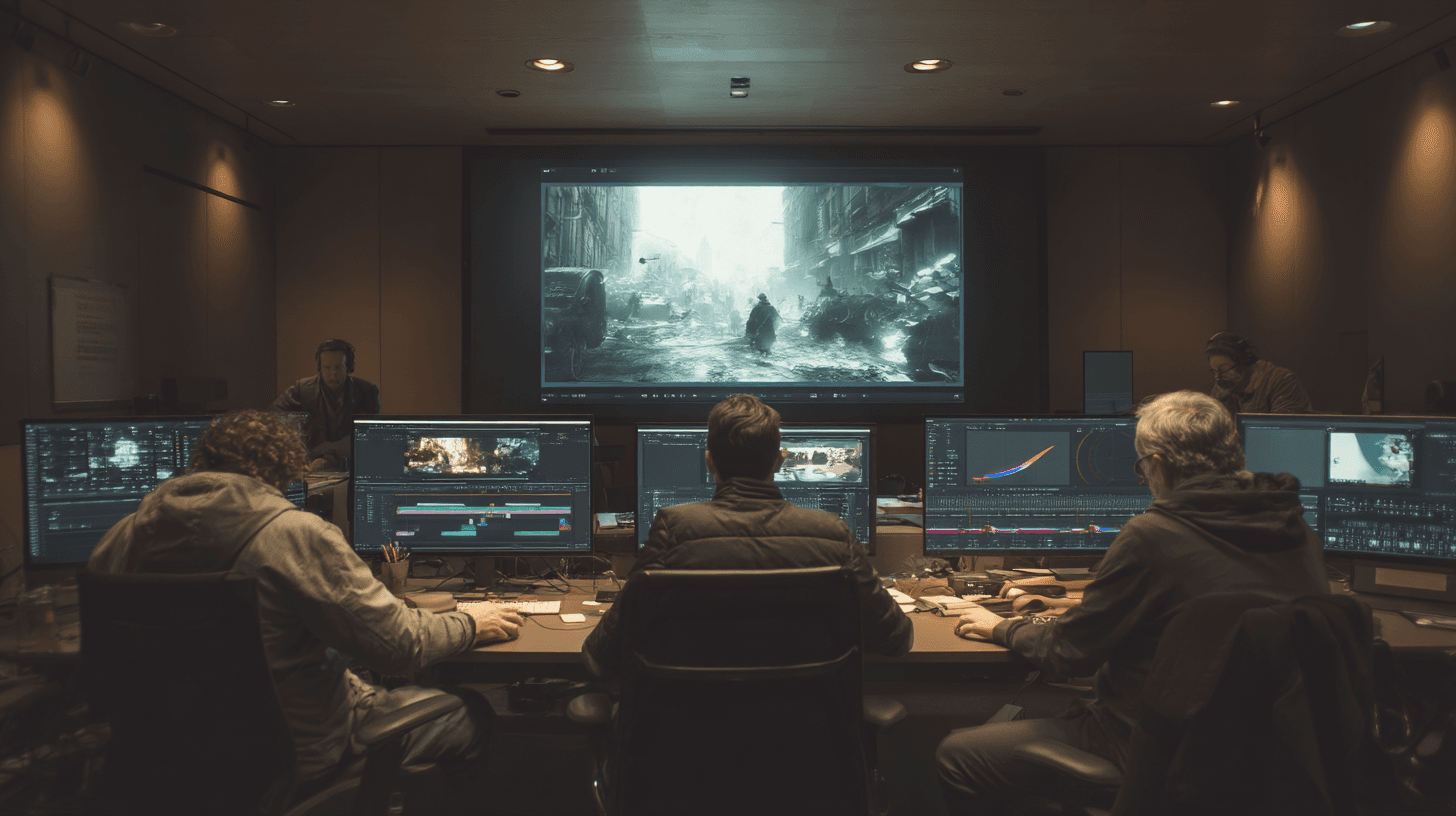
People see a finished Komodo X frame and assume the AI made it. The AI made about 30% of it.
The rest was me. And the director. And the colorist. And the compositor. And the sound designer. And the editor who decided this frame deserved 2.4 seconds instead of 1.8.
That collective human layer between raw generation and finished output is where the actual art happens.
Step 1: Generation Is Not Acceptance
When I generate a frame from a prompt — whether it's for a brand campaign or an original film — I might run fifty to a hundred variations before I see something that has potential. Not something finished. Something that has the bones of what the director asked for.
Step 2: The Correction Pass
Every raw AI output has artifacts. Inconsistencies in texture. Repeating patterns that reveal the generative process. Anatomical details that are almost right but not quite.
I go in manually. Painting corrections. Fixing edge details. Rebuilding areas where the AI lost coherence. On a complex frame, the correction pass alone can take longer than the generation itself.
Step 3: Compositing
Most finished frames are not single generations. They're composites — multiple AI outputs layered together, combined with hand-painted elements, environmental extensions, particle effects, and sometimes live-action plates.
"The compositing stage is where a flat AI output starts to feel like it exists in a real world with real physics."— Osama Hassan
Step 4: Color Grading
This is where emotion enters the frame. The raw generation might be technically correct — proper exposure, reasonable color — but it has no mood. No temperature. No feeling.
Our colorist takes every frame and shapes its emotional character. Pushing the shadows cooler to create unease. Warming the highlights to feel nostalgic. Desaturating midtones to feel clinical.
Step 5: Integration Into the Edit
A frame doesn't exist in isolation. It exists inside a sequence, between the frame before it and the frame after it. The editor decides how long you see it. Whether it cuts hard or dissolves soft.
Step 6: Sound Design
The final layer that most people underestimate. A frame with no audio feels like a photograph. Add the right ambient sound — wind, room tone, fabric movement, distant traffic — and suddenly it feels like a window into a world.
Why This Matters
For brands and clients: when you evaluate AI production, don't judge a studio by its raw generations. Judge it by its finished work. The gap between those two things is where the craft lives.
For AI artists: if you're posting raw outputs and wondering why your work isn't getting the recognition you think it deserves — this might be why. The generation is the sketch. Everything after it is the painting.
The AI made the raw material. The humans made the art.